
Why Flat Insoles Fail — and How Remind Insoles Actually Fix the Problem
If you’ve ever wrapped up a long day wondering why your feet are throbbing, aching, or just plain exhausted, you’re not alone. Most people assume their discomfort comes from the shoes they’re wearing—but in reality, the real issue often sits inside the shoe.
Stock insoles and flat insoles might look harmless, but most of them simply aren’t built to support the way your feet actually move. And when your foundation isn’t supported, everything above it pays the price.
Understanding why flat insoles don’t work is the first step toward finally solving the daily foot pain cycle—and upgrading to a proper insole can be one of the easiest, most effective improvements you can make for your comfort, performance, and long-term foot health.

Flat Insoles Don’t Support Your Arch—And That Causes a Chain Reaction of Pain
A lot of people assume a flat insole equals comfort because it feels soft or “neutral.” But that softness is temporary, and the neutrality is misleading.

Your arch is designed to act like a spring. It absorbs shock, stabilizes your stride, and helps protect the rest of your body from repetitive impact. When you stand on a flat surface all day—especially one with no structure—your arch collapses under your weight. Even people with naturally low arches still need some degree of arch support to maintain proper alignment and reduce strain.
Without arch support, your body compensates in all the wrong ways:
-
Your ankles roll inward
-
Your knees rotate out of alignment
-
Your hips and lower back take on extra stress
-
Your plantar fascia overstretches
-
Your heel absorbs more impact than it should
Over time, this creates the perfect storm for common foot problems, including:
-
Arch pain
-
Heel pain
-
Plantar fasciitis
-
Shin splints
-
Tendon strain
-
Joint aches
-
Premature fatigue
Flat insoles essentially allow your body to move inefficiently, increasing impact forces and forcing your muscles to work much harder just to keep you balanced.

What Proper Arch Support Should Actually Do
A supportive insole isn’t about pushing your arch up unnaturally—it’s about helping your foot stay in its ideal position so your stride can function the way it’s meant to. The right insole should help:
-
Distribute pressure evenly across the foot instead of dumping weight into the heel or forefoot
-
Reduce strain on the plantar fascia
-
Improve ankle alignment, which improves knee and hip alignment too
-
Absorb shock more efficiently, reducing fatigue
-
Provide stability during movement, especially for sports or long work days
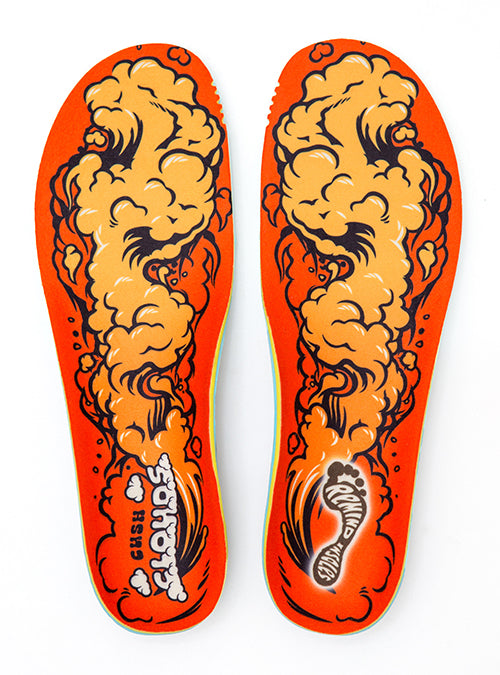
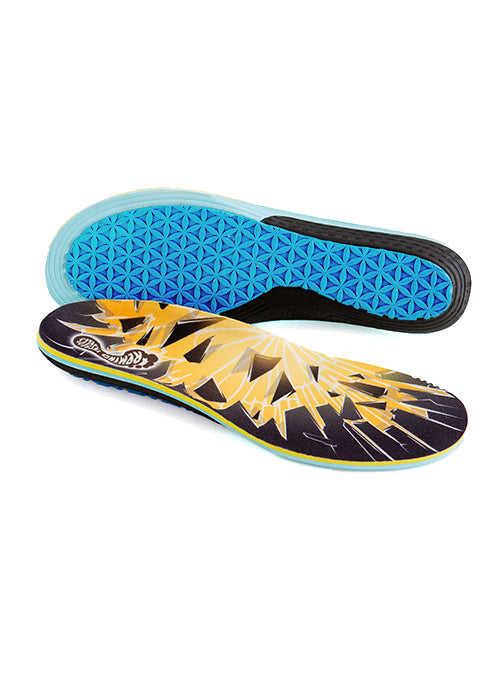
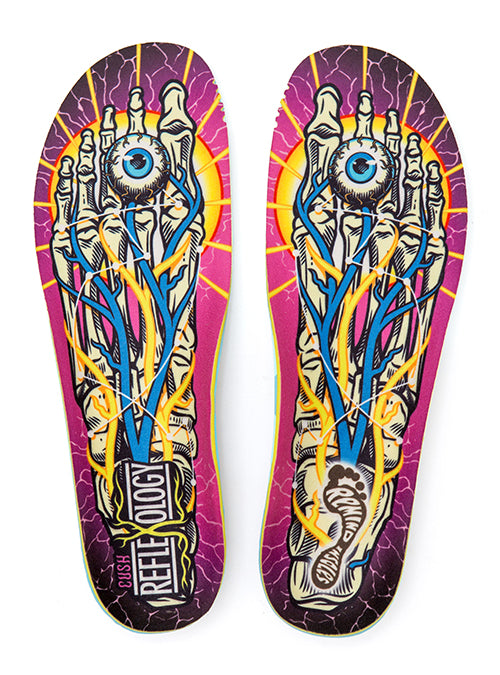
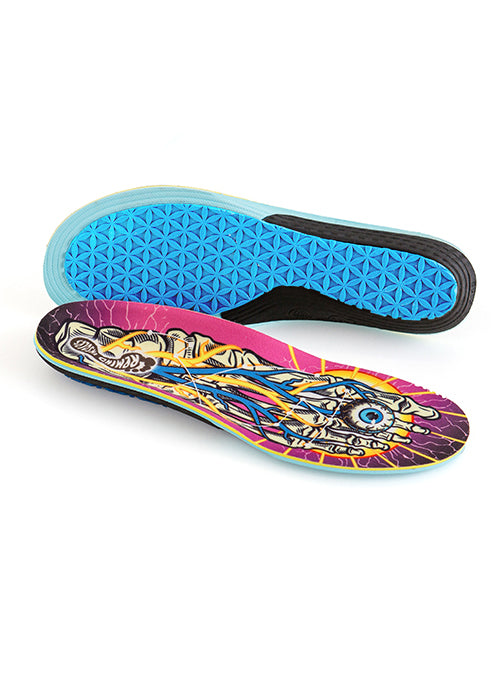
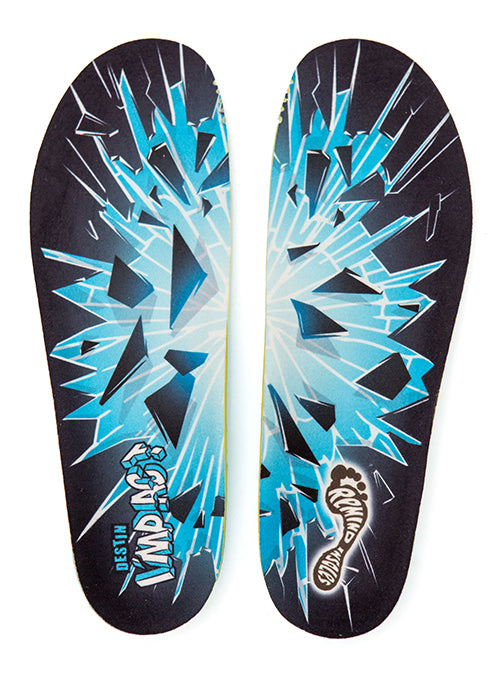
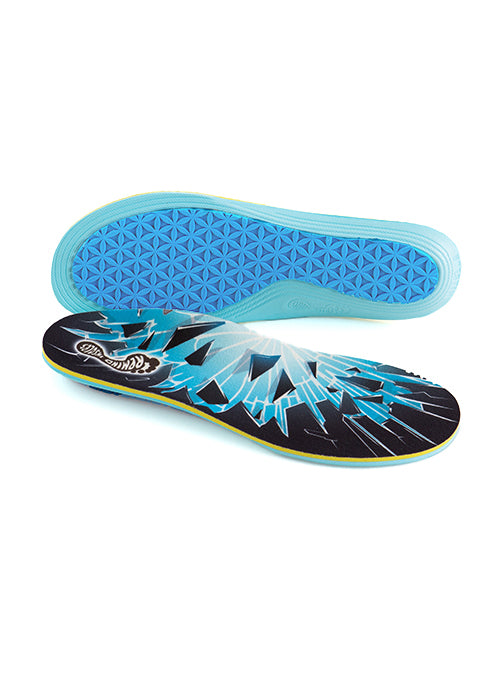
That’s why Remind Insoles are designed with built-in arch support, curated for different foot types instead of a one-size-fits-all approach.
-
The Medic and The Cush = ideal for mid to high arches
-
The Destin = great for lower arches or flatter feet
When your arch is supported properly, everything from balance to comfort improves—and your feet don’t have to fight gravity all day long.

Cushioning Is Just As Important as Support
Even with good arch structure, an insole needs proper cushioning to protect your joints from repeated impact. Every step you take generates force that travels up your foot into your ankles, knees, hips, and spine. Without shock absorption, those forces build up—and that’s where pain begins.
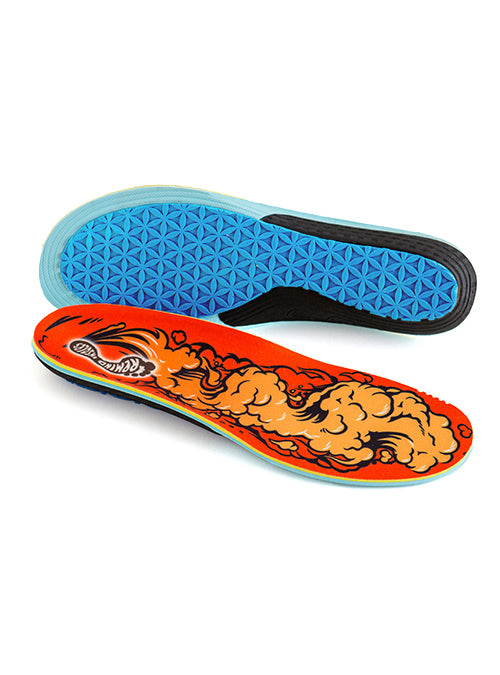
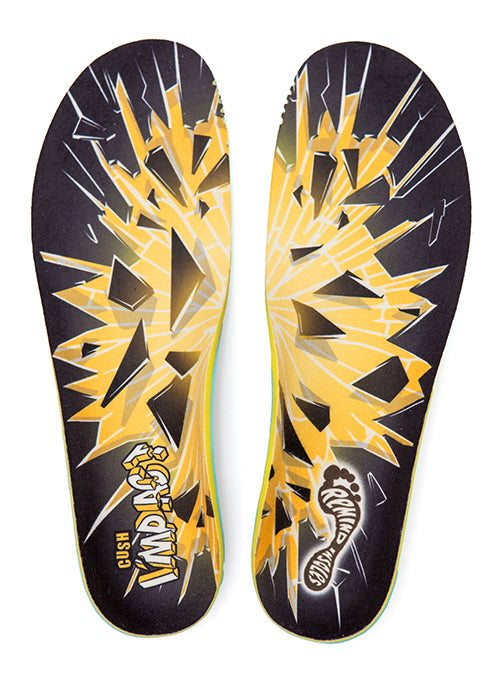
Remind’s High Impact Insoles are engineered to absorb up to 90% of impact shock, making them ideal for anyone who’s:
-
On their feet all day
-
Skating, running, snowboarding, hiking, or training
-
Recovering from injuries
-
Looking for long-term joint relief
Cushioning doesn’t just make things feel soft—it reduces real, measurable stress on your body.
Insoles Can Help Specific Foot Problems Too
If you’re dealing with plantar fasciitis, bunions, heel pain, overpronation, or general fatigue, the right insole can make a dramatic difference. Remind Insoles are designed with targeted features that help:
-
Lift and support the arch
-
Reduce pressure on sensitive areas
-
Align the foot to reduce strain
-
Provide cushioning where the foot needs it most
For plantar fasciitis specifically, proper arch support plus shock absorption can help calm inflammation and prevent further damage—something flat insoles simply can’t offer.
Fit Matters: Matching Insole Thickness to Your Shoe
One of the most overlooked parts of choosing an insole is ensuring it fits properly inside your shoe. If the insole is too thick, your foot can feel cramped. Too thin, and you lose the support you're paying for.
Remind offers multiple thickness options so you can replace the stock insole with one that fills the shoe exactly the way it did before—just with significantly better performance and comfort.
No slipping, no heel lift, no tightness. Just a simple upgrade that improves the feel of every step.

Choose an Insole That Fits Your Needs and Your Lifestyle
At the end of the day, choosing the right insole is about understanding what your feet need and what your daily life demands. Maybe you’re on the job all day. Maybe you skate or snowboard. Maybe your arches need specific support. Maybe you just want to stop feeling pain every time you stand up after sitting for too long.
Whatever the case, the solution is simple: your feet need structure, stability, and cushioning—not a flat piece of foam.
Remind Insoles are built to provide all of that, tailored to your arch type, your activity level, and your comfort goals. And if you ever need help figuring out which model is right for you, our team is always down to help. Just shoot us an email—we’re here to make sure your feet feel the way they should.
Because when your feet feel good, everything else gets better too.
Not sure which Remind Insoles are right for YOU? Take our Insole Finder Quiz and find your perfect match.


Leave a comment