

5 Reasons Proper Shock Absorption Matters
Every step you take creates force. Every run, stair set, warehouse shift, hike, or hard landing sends impact into the ground — and then straight back into your body. And I’ll tell you what—that impact doesn’t disappear. It travels.
From your heel to your arch. From your ankle to your knee. From your hips into your lower back. The only question is: how much of that force are you absorbing — and how much is your body forced to handle?

Proper shock absorption isn’t about softness. It’s about protection, stability, and long-term performance. And it’s one of the most important (and overlooked) features inside your shoes. Here are five reasons it matters more than most people think, along with how Remind insoles can help.
1. Your Joints Take the Hit If Your Insoles Don’t
When your foot strikes the ground, it absorbs the first wave of force. If there’s no structured cushioning in place, that force moves upward. Heel pain is often the first sign. Then knees. Then hips. Then lower back tightness that shows up after long days.
Stock insoles are typically thin foam liners. They compress quickly and lose their ability to absorb impact effectively. Once they flatten, your body becomes the shock absorber. Over time, that repeated stress compounds. Proper shock absorption helps reduce peak impact before it ever reaches your joints. It doesn’t eliminate force — nothing can — but it significantly reduces how much travels up the chain.

2. Repetitive Impact Is More Damaging Than Big Impact
Most people think injuries come from one big event. But in reality, they often come from repetition. Running miles on pavement. Skating every single day. Standing and stepping on concrete for 10-hour shifts. It’s the small impacts, repeated thousands of times, that break tissues down.
And without adequate shock absorption, your plantar fascia, Achilles tendon, and surrounding muscles are constantly managing micro-trauma. That’s when soreness turns into chronic irritation. Proper cushioning helps buffer that repetition. It spreads force over a longer duration and across a wider surface area, reducing localized stress. The result? Less breakdown. More longevity.
3. Fatigue Starts at the Ground
Impact doesn’t just cause pain — it drains energy. When your feet aren’t properly supported, muscles in your lower legs work overtime to stabilize and protect against force. That constant tension accelerates fatigue. You feel it halfway through a run. You notice it during the last hour of a shift. You sense it when your skate session loses pop.
Shock absorption helps preserve efficiency. When force is managed at the foot level, your body doesn’t have to compensate as aggressively. Less compensation equals less wasted energy. You stay fresher longer — whether you’re training, working, or exploring outdoors.

4. Hard Surfaces Amplify Everything
Concrete, tile, asphalt, skateparks — modern surfaces are unforgiving. They don’t give. They don’t flex. They return energy immediately and directly. That means whatever force you put into the ground comes right back at you. Without proper shock absorption inside your shoe, there’s nothing to interrupt that exchange. Supportive insoles create a protective barrier between your body and those surfaces. They absorb and disperse force before it rebounds upward.
This is especially important for:
-
Warehouse workers
-
Nurses and healthcare professionals
-
Retail and service industry workers
-
Runners logging pavement miles
-
Skaters/Snowboarders taking repetitive impact
If you live on hard surfaces, shock absorption isn’t optional — it’s essential.
5. Stability and Shock Absorption Work Together
Soft foam alone isn’t the answer. If cushioning is too soft without structure, your foot collapses inward under load. That instability creates more strain — not less. True shock absorption works with arch support and alignment control. When your foot is held in a more neutral position, force is distributed more evenly. Instead of pooling at the heel or forefoot, it spreads across the entire foot.
That balance between cushioning and structure is what keeps you stable under impact — not sinking, not wobbling, not fighting for balance. And stability under load means better performance across the board.

Where Remind Insoles Come In
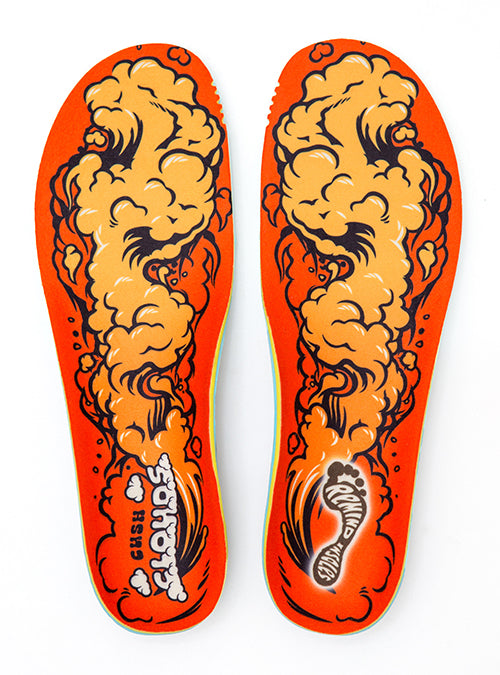
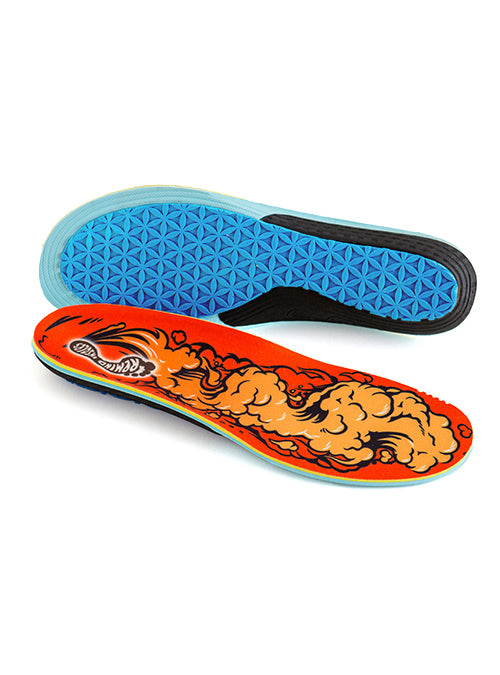
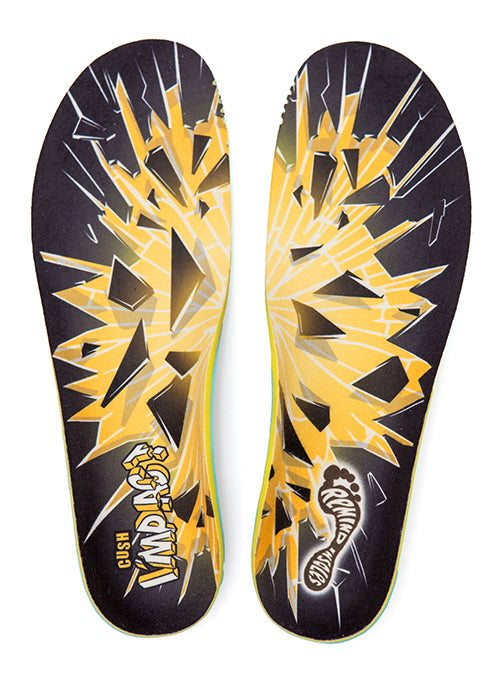
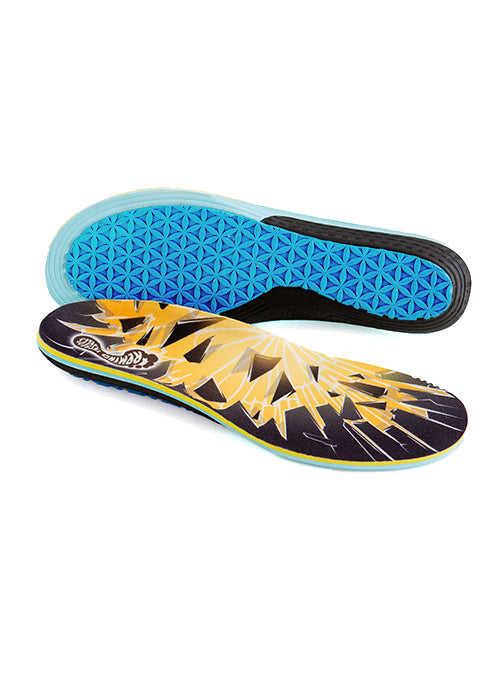
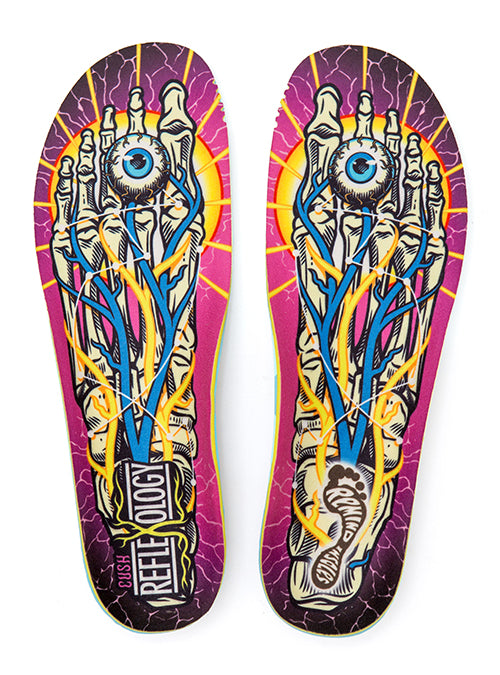
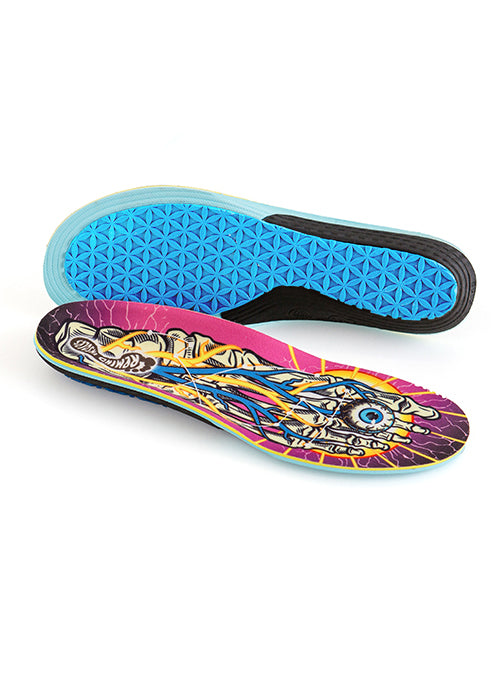
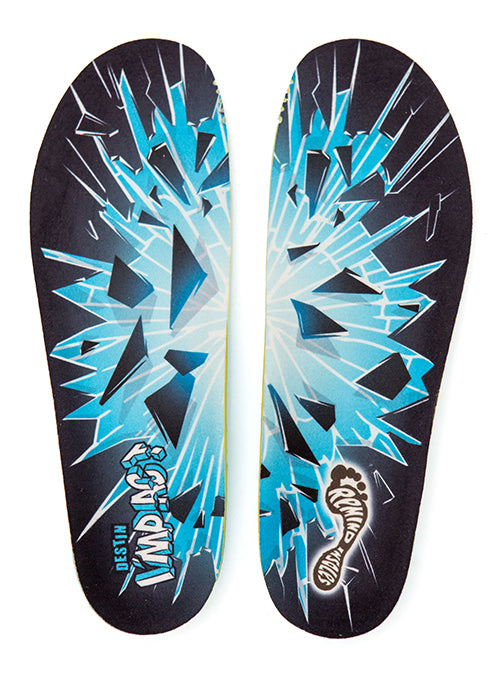
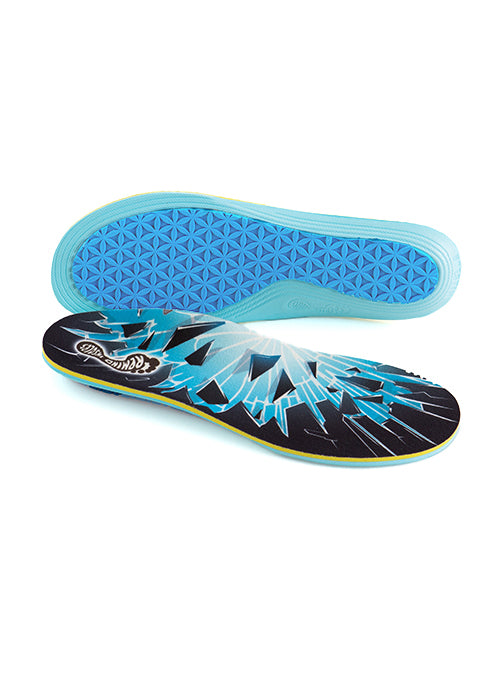
Shock absorption is one of the core design principles behind Remind Insoles. They’re built to handle real-world impact. Each model—the Cush, Medic, Destin, Rede and heat-moldable Remedy—is designed with durable cushioning that resists flattening and structured support that maintains alignment.
Again, whether you’re skating, running, hiking, training, or working long shifts, impact is part of the equation. Remind insoles are built to manage it. They don’t bottom out after a few weeks. They’re designed to hold their shape and continue absorbing force consistently over time — because shock absorption only works if it lasts.
Impact Is Inevitable. Breakdown Isn’t.
You can’t eliminate impact from movement. Nor should you want to. Impact is part of performance. It’s part of strength. It’s part of living actively. But unmanaged impact is what leads to fatigue, soreness, and long-term wear and tear.
The right insole doesn’t make you soft. It makes you supported.
It reduces the amount of force your body has to absorb on its own. It keeps your alignment more stable. It protects your joints and tissues from unnecessary stress.
Remember: impact doesn’t disappear. It travels.
The question is whether you’re absorbing it intelligently — or letting it accumulate unchecked. If you’re serious about staying active, staying comfortable, and staying consistent, start with what’s under your feet.
Upgrade your insoles. Protect your foundation. Move better, longer. And most importantly… get out there and get rad!
Not sure which Remind Insoles are best for YOUR feet? Take our Insole Finder Quiz and find your perfect match!


Leave a comment