

Why Most Insoles Fail at Managing Impact
Your feet take a lot of abuse. From every step you take to every mile you run. Every jump. Every landing. Every push, drop, session, hike, workout, grueling shift on your feet… it all adds up and takes a toll.
So with that in mind, it’s sort of funny that the thing sitting directly inside your shoes—supporting your feet—is often the last thing anyone thinks about. Most shoes come with insoles. I get that. Great. Problem solved, right? Ha! Not even close.  A lot of stock insoles are designed to be comfortable enough to get the job done on day one, but that doesn’t necessarily mean they’re built to actively manage the impact your feet deal with every day. And if impact protection isn’t part of the equation, your feet are left doing a whole lot of the work themselves. That’s one of the main reasons we built Remind—to give your feet some relief!
Your Feet Absorb More Impact Than You Think
Every time your foot hits the ground, it deals with force. I know it sounds obvious, but think about it. For some people, that means thousands of steps during a normal day. For runners, skaters, hikers and athletes, it can mean way more. Add hard surfaces, all that repetitive movement, jumping and even landing tricks to the mix, and again, your feet will really start to feel it.
At the same time, your body is designed to handle impact. Your feet, ankles, knees and the rest of your lower body work together to absorb and distribute those forces. But there’s only so much work you can ask them to do before they start asking for a little help.
We nerd out on foot health a lot around these parts, and tons of research has shown that different insole materials and designs “can influence things like plantar pressure and impact-related mechanics.” To simplify those fancy words, just know the stuff underneath your feet can actually make a difference in how forces are distributed. So why are better insoles still such an afterthought?

The Problem With “Good Enough”
Stock insoles aren't necessarily bad. Eh, actually, I can’t say that. They are bad. But they’re also just typically designed to serve a basic purpose: give your foot something to stand on inside the shoe. And I mean, I guess that can be fine. But if you're asking that same insole to handle repeated impact from things like skateboarding, running, hiking, training, working or spending all day on your feet, “fine” just ain’t gonna cut it.
That silly little piece of foam can technically make a shoe feel a little more comfortable, if only temporarily, but comfort and impact management aren't necessarily the same thing. You want cushioning that helps absorb impact. You want support that helps distribute pressure. You want materials that can hold up when you're putting them through the wringer. And, ideally, you want all of that without feeling like you're standing on a giant marshmallow.
More cushioning doesn't automatically mean better. It’s all about finding the right balance.

Impact Protection Is a Big Deal at Remind
Let’s take a quick trip back in time. When we started designing Remind insoles, impact protection wasn't some random thing we decided to tack on later. It was part of the plan from the beginning, and at this point in our story, I’d say it shows.
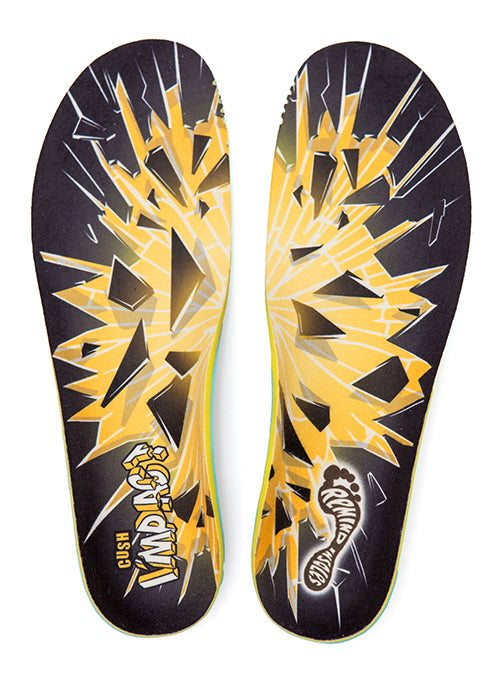
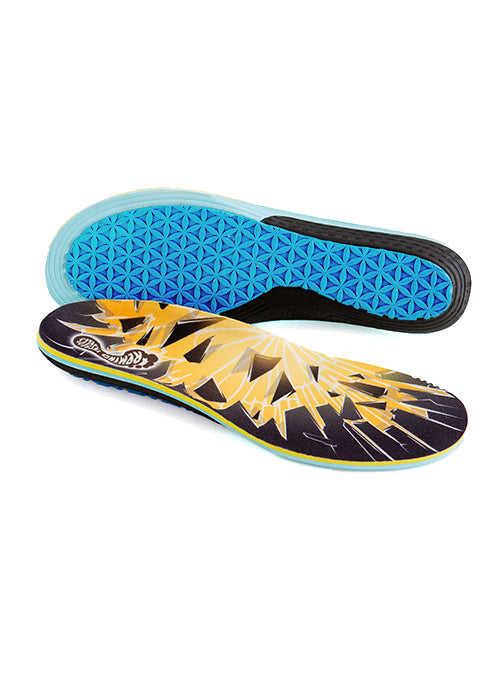
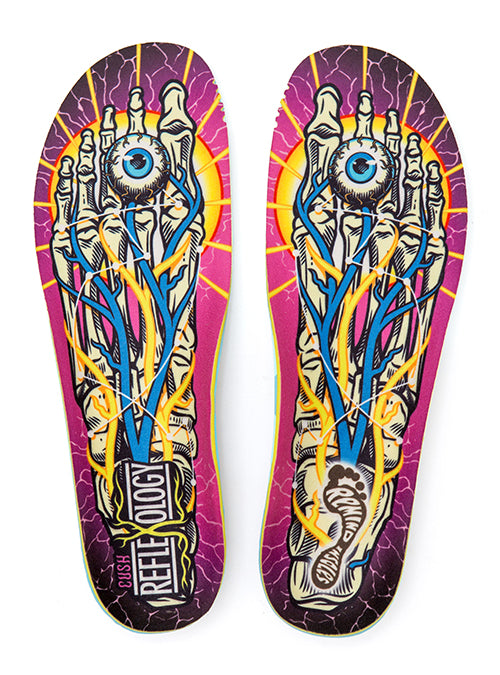
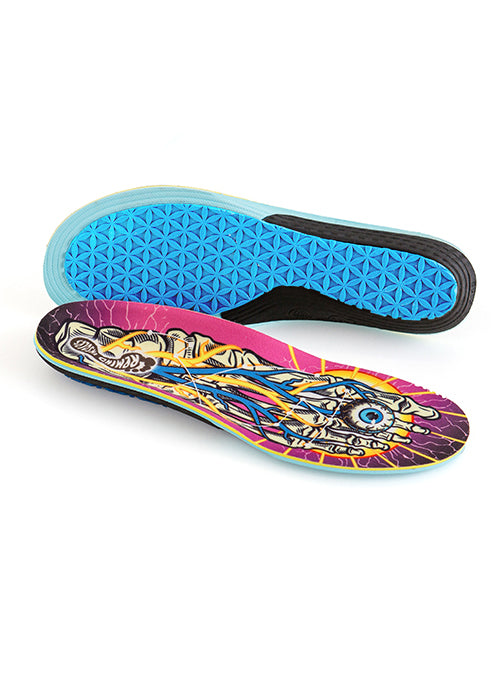
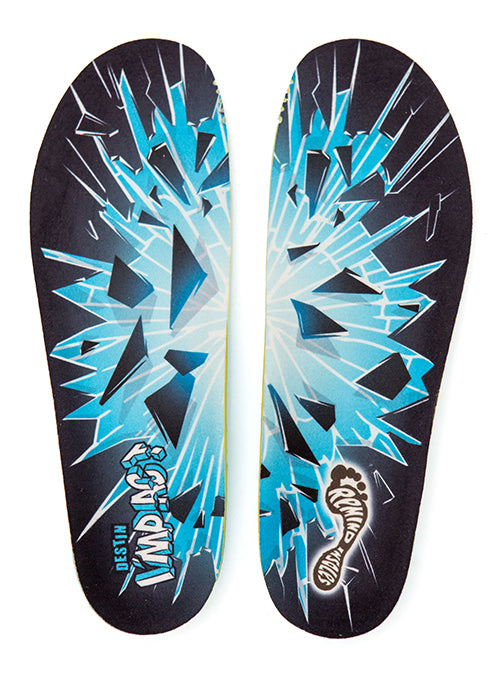
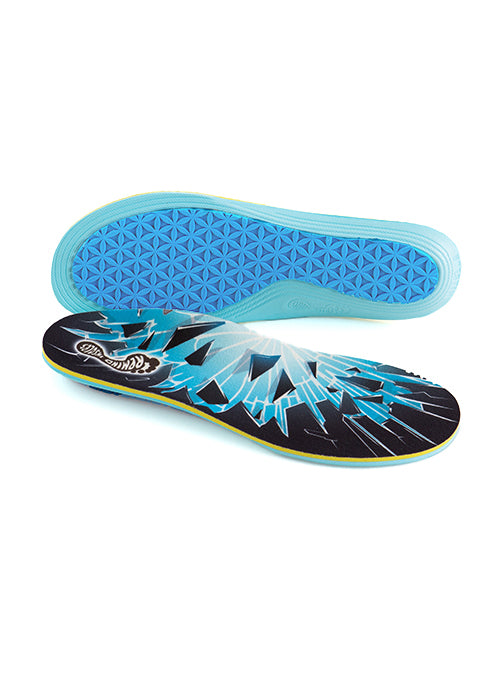
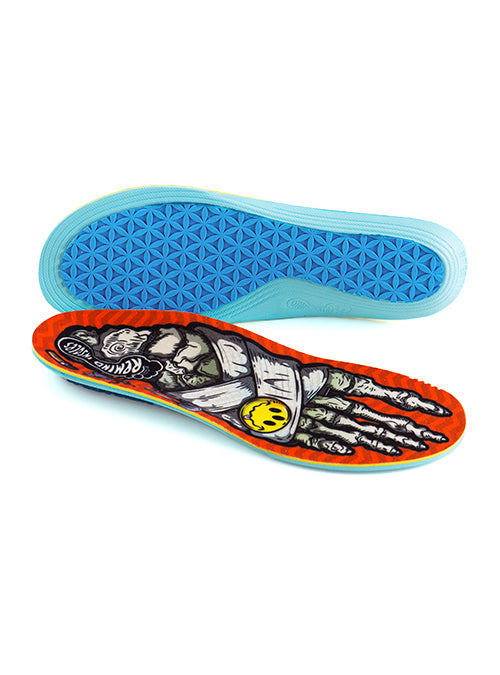
Every Remind insole is designed with impact protection, shock absorption, energy return and comfort in mind. From our Medic and Destin to our Cush, REDE and Remedy, the goal has never been to simply make a “softer” insole. Lots of other brands clearly make that their focus, and we’ll happily let them. Our goal has always been to create something that helps your feet deal with the demands of whatever you're doing.
Skateboarding? Yep.
Running? Absolutely.
Working on your feet all day? Mhmmm.
Hiking, training, traveling, walking the dog or just trying to make it through another day without your feet feeling completely wrecked? Yes, yes, yes. That's what we're talking about.
Different feet. Different activities. Different levels of impact. Same basic idea: give your feet a better foundation.

Absorption Is Only Part of the Equation
When we talk about impact, there's more to it than simply “making things softer.” Shock absorption is important because it can help dissipate some of the forces your feet experience. But we also care about what happens after that. That's where energy return comes into play, and honestly, it’s just as important.
A good insole should help manage impact without feeling dead underneath your feet. You want some give when you need it, but you also want a responsive feel that helps keep you moving. It's a balance between protection and performance. Cushioning and support. Impact absorption and energy return. Comfort and responsiveness. Basically, we don't think your insoles should make you choose. And with Remind, you never have to.

Why Remind Takes a Different Approach
We make different insoles for different feet, because not everybody needs the same thing. Our arch-specific designs are built around the idea that your feet deserve more than a one-size-fits-all piece of foam. Whether you have low, medium or high arches, there’s a Remind designed to provide the type of support and cushioning that fits your needs.
And not to toot our own horn too loud, but across the line, impact protection remains a major part of the equation.
Also, we're not necessarily just making insoles for people who occasionally walk around the block. It'll make that walk way better, don't get me wrong! But we're making them for people who put their feet to work. Skaters obsessed with progression. Runners logging countless miles. Workers putting in long shifts. Hikers reaching peaks. Athletes training day after day. People who are simply on their feet from sunrise to sunset. All walks of life. Literally. We see you!

Does a Better Insole Guarantee You Won't Get Hurt?
Nope. Of course not! That’s a heavy claim. And anyone telling you otherwise is probably trying a little too hard to sell you something.
No insole can guarantee that you won't experience foot pain or an injury. Your shoes, activity level, training, recovery, biomechanics and plenty of other factors all play a role.
That said, research on shock-absorbing insoles and injury prevention is also mixed, so it's important not to confuse impact protection with a guarantee against injury. What a well-designed insole can do is provide another layer of cushioning, support and impact management between your feet and the ground. And when your feet are dealing with repeated impact day after day, that matters.

Give Your Feet Something Better
Your shoes might be expensive. Your board might be expensive. Your fancy little running watch probably cost more than it should. But somehow, that little piece of foam underneath your feet is still getting treated like an afterthought! We think your feet deserve better.
Remind insoles are designed with impact protection at the top of the list, along with shock absorption, energy return and comfort for whatever life throws at you. Your feet are your foundation. And if you're going to keep moving, working, skating, running, hiking, training and doing whatever the hell else you do all day, you might as well give them something worth standing on.
This is kind of turning into a tradition now, so let’s say it together: RIP stock insoles!
Ditch ‘em and get moving. Your feet have work to do.


Leave a comment